Vitamin B6 (pyridoxine)
Pyridoxine hydrochloride or pyridoxal-5-phosphate (P5P). Buy a low-dose single-ingredient product so you can control the total — B6 is hidden in most B-complexes, energy drinks and 'hormone balance' blends, and stacking is how people reach neuropathic doses without noticing.
Caution
A safety issue or a clash with medicines
Graded caution on dose safety, not on absence of effect. The pooled OR is favourable and a 2024 review still lists B6 among the few nutrients with consistent effects on psychological PMS symptoms — but the 1999 evidence base is explicitly low quality, the CI (1.95–2.54) is implausibly tight for nine small trials, there has been no modern replication in over 25 years, and the doses that produced the effect sit 4–8× above EFSA's current upper limit with peripheral neuropathy as the established endpoint. That mismatch, not the effect size, sets the grade.
People taking it were about twice as likely to feel better before their period, but the studies behind that were rated low quality by the reviewers themselves. High doses over time can damage nerves.
Pooled odds of overall premenstrual symptom improvement were 2.32 versus placebo (95% CI 1.95–2.54), and 1.69 for premenstrual depression (95% CI 1.39–2.06) — but from trials the reviewers themselves rated low quality.
Pyridoxal-5-phosphate is the cofactor for decarboxylation of 5-HTP to serotonin and of glutamate to GABA, which is the proposed route to premenstrual mood effects. The same neurochemical potency is why excess is neurotoxic — the therapeutic and toxic mechanisms are not far apart.
People whose charted premenstrual burden is predominantly mood — low mood, irritability, anxiety — rather than physical, and who have low dietary B6. Second-line behind calcium, and only with a defined stop date and a symptom log to justify continuing.
What to buy
- ✓Pyridoxine hydrochloride or pyridoxal-5-phosphate (P5P). Buy a low-dose single-ingredient product so you can control the total — B6 is hidden in most B-complexes, energy drinks and 'hormone balance' blends, and stacking is how people reach neuropathic doses without noticing.
- ✓Do not exceed 50 mg/day, and 10–20 mg/day is the defensible starting point. Trials used 50–600 mg/day, but EFSA's 2023 upper limit for adults is 12 mg/day, so the efficacy range sits above the regulatory ceiling. Total your intake across every product you take.
- ✓Third-party tested (USP, NSF, Informed Sport)
- ✕Proprietary blends that hide the dose per ingredient
- ✕Unstandardised extracts with no active-compound percentage
As an Amazon Associate, Umbral earns from qualifying purchases. Product data is provided by Amazon and may change; ratings and prices shown are Amazon’s, not Umbral’s. Recommendations are based on the evidence grade and the form used in trials, never on commission.

25 mg, deliberately low. B6 is the one vitamin here where chronic excess causes nerve damage, and it hides in B-complexes, energy drinks and hormone blends — stacking is how people get there without noticing.
Buy on Amazon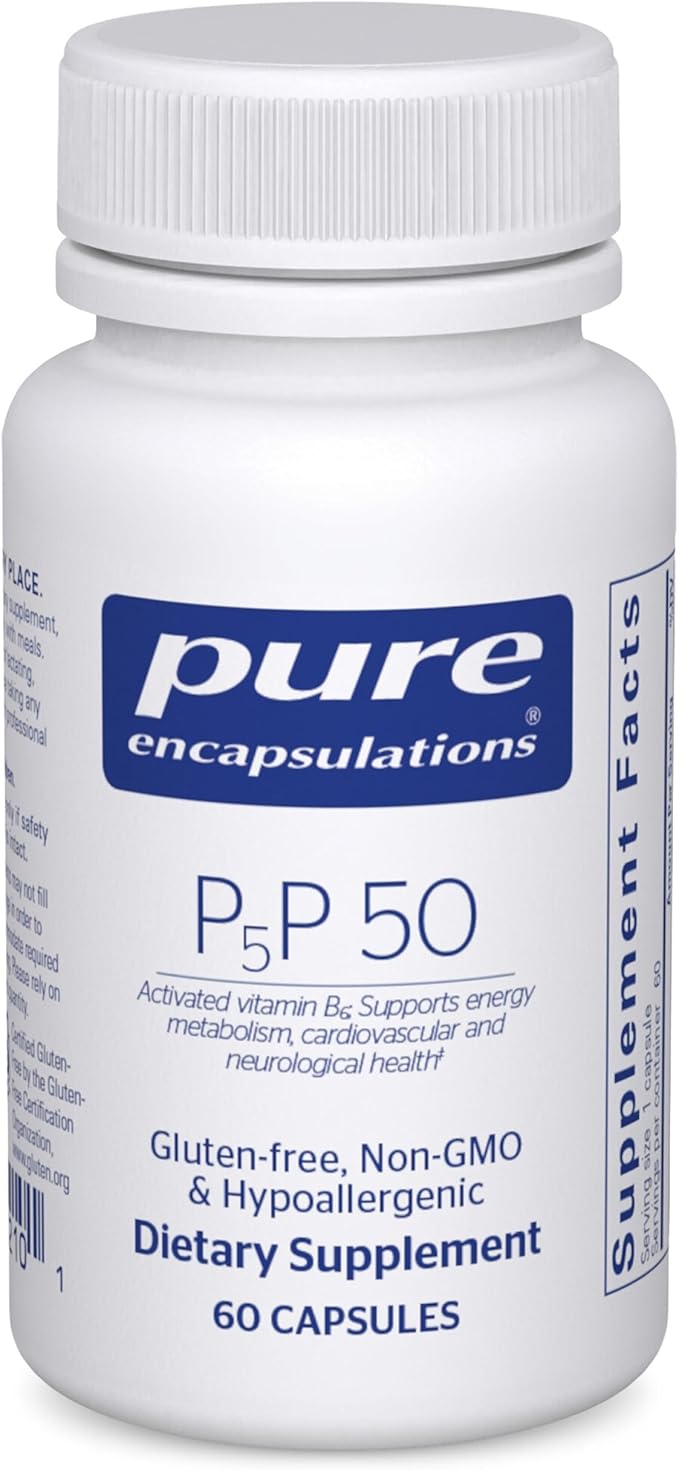
Pyridoxal-5-phosphate is the active form, at exactly 50 mg — the ceiling this app will recommend. Do not go above it.
Buy on Amazon
The same active form at a lower price per capsule. Single ingredient, so you can count exactly how much B6 you are taking in a day.
Buy on AmazonPrefer to compare yourself? This opens Amazon’s full selection for this supplement, filtered to the form we recommend.
See all on AmazonEvery result, next to the line that means no effect
Each diamond is a study's best estimate. The thin line shows how sure the study was: the shorter the line, the more certain the result.
- Overall premenstrual symptom improvementodds ratio vs placebo · Wyatt 1999, BMJ, 9 RCTs, n=940+2.32+1.95 … +2.54
- Premenstrual depression improvementodds ratio vs placebo · Wyatt 1999, BMJ, 4 RCTs, n=541+1.69+1.39 … +2.06
- Lowest trialled efficacy dose above the EFSA upper limitmg/day over the 12 mg/day UL · EFSA NDA Panel 2023 (UL 12 mg/day) vs Wyatt 1999 lowest trial dose 50 mg/day+38.0[not given]
Each unit gets its own scale, so numbers are never mixed on one line. When a study gave no range, we leave it blank instead of inventing one.
3 studies over 25 years
The studies
- 1.Efficacy of vitamin B-6 in the treatment of premenstrual syndrome: systematic reviewBMJ · 1999 · rct · 9 experiments · n = 940
Overall symptom improvement OR 2.32 (95% CI 1.95–2.54); premenstrual depression OR 1.69 (1.39–2.06) across 4 trials (n=541). Doses ranged 50–600 mg/day. The authors explicitly note the low quality of most included trials and recommended no more than 100 mg/day.
- 2.Scientific opinion on the tolerable upper intake level for vitamin B6EFSA Journal · 2023 · rct
Set the adult tolerable upper intake level at 12 mg/day, based on peripheral neuropathy as a well-established endpoint and a reference point of 50 mg/day from a case-control study corroborated by case reports and surveillance data. The same 12 mg/day limit applies in pregnancy and lactation.
- 3.Effect of nutritional interventions on the psychological symptoms of premenstrual syndrome in women of reproductive age: a systematic review of randomized controlled trialsNutrition Reviews · 2024 · rct · 31 experiments
Lists vitamin B6 with calcium and zinc as consistently showing positive effects on psychological PMS symptoms, citing trials at 50 mg/day and 150 mg/day. Notes evidence for B6 was less consistent than for calcium, and that only 1 of 31 included studies was at low risk of bias.
Umbral is a wellness product, not a medical device. It does not diagnose, treat, cure or prevent any disease. Supplement information is educational; talk to a clinician before starting anything, especially if you are pregnant, under 18, managing a condition or taking medication.
These statements have not been evaluated by the Food and Drug Administration.